Will you get seasick on a Komodo boat trip? Most guests don’t: April–November crossings are short and sheltered, phinisi hulls ride swell gently, and the worst stretches last under an hour. December–February is the honest exception — bigger swells, occasional harbor holds. If you’re motion-sensitive, the fix is a stack of small decisions: month, boat, cabin position and a medication protocol that starts the night before.
Komodo Sea Conditions Month by Month
| Months | Sea state | Motion-sensitive verdict |
|---|---|---|
| Apr–Jun | Calmest of the year, glassy mornings | Ideal — book freely |
| Jul–Aug | Good, afternoon east-wind chop | Fine — morning crossings, midship seat |
| Sep–Nov | Calm returning, excellent | Ideal |
| Dec–Mar | NW swells, rain squalls, variable | Choose big phinisi + flexible routing |
Deeper seasonal context: best time to visit and rainy season honestly.
The Roughest Stretches — and the Sheltered Alternatives
Inside the park, most sailing threads between islands in protected water. The two stretches that move: the open run toward the southern sites (Manta Alley) and the current lines of the Linta Strait, where chop stacks when wind opposes tide. Captains time these for slack water and mornings; in marginal weather they swap south-park stops for the sheltered northern loop — Kelor, Rinca, Kalong — and nobody’s trip is worse for it. That judgment call is what you’re really buying with an experienced crew (how our captains decide).
Boat Choice Matters More Than Medication
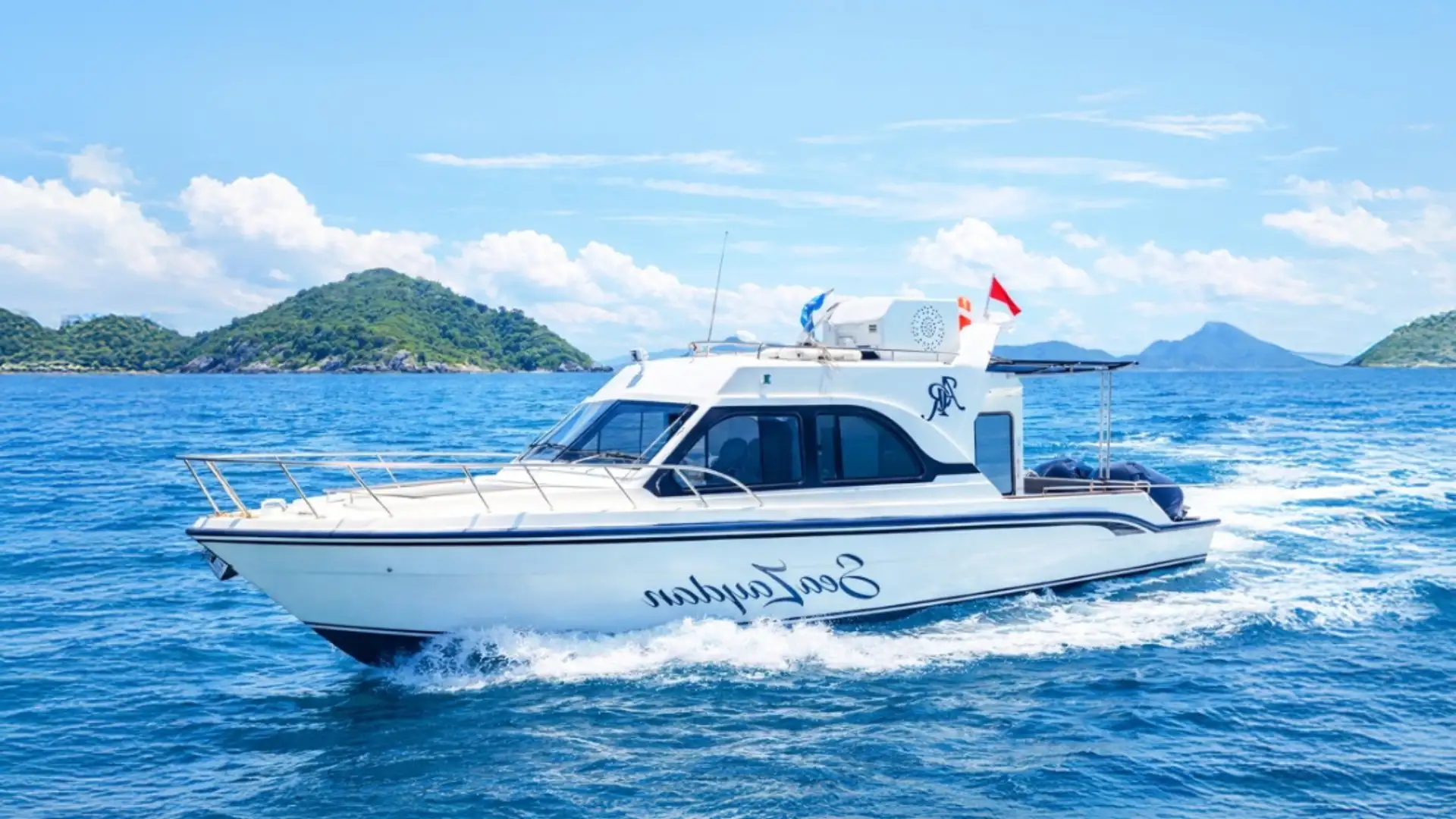
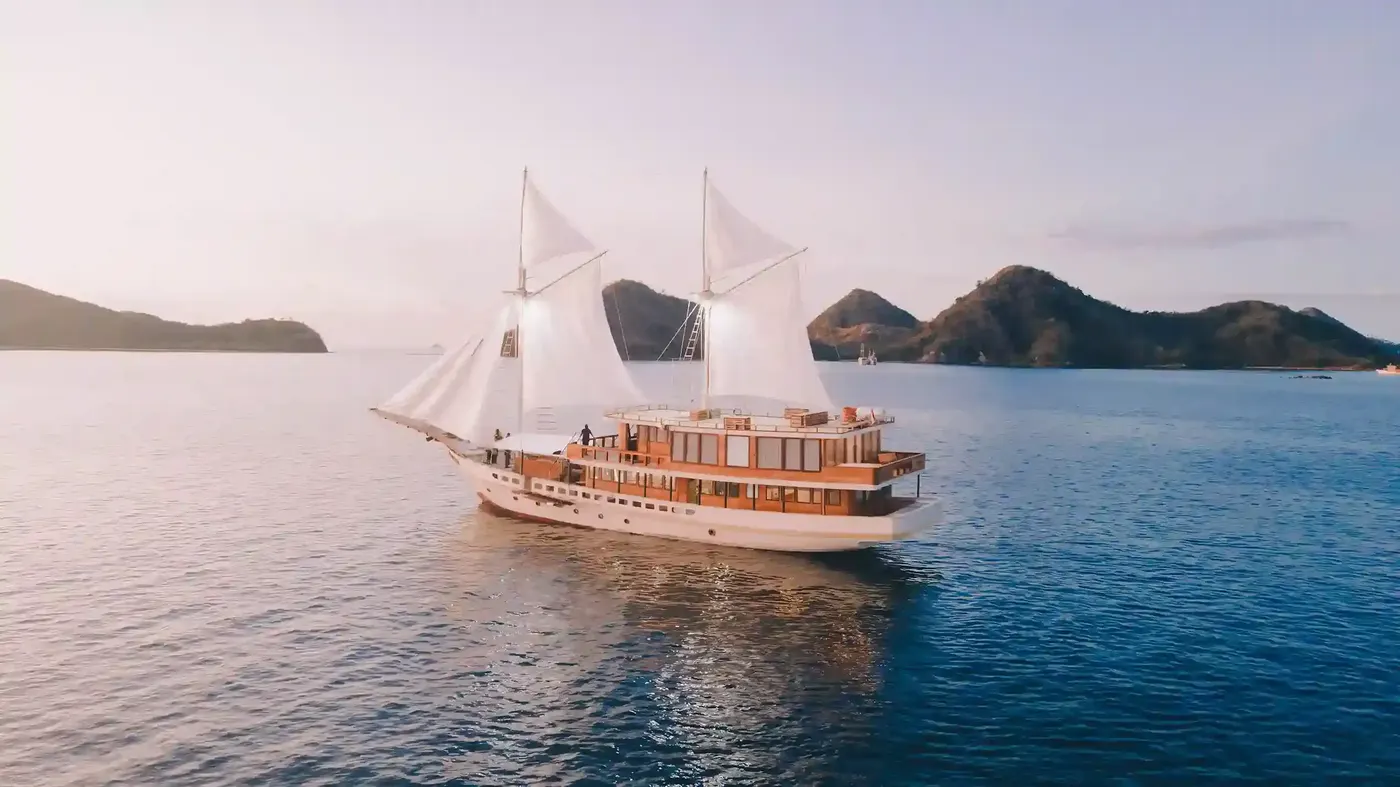
Displacement-hull phinisi roll slow and predictable — the motion stomachs adapt to. Speedboats slap through chop at 25 knots: faster exposure, sharper motion. Sensitive travelers should sail phinisi (the comparison), book a midship cabin on the main deck (least motion, best airflow), and spend crossings on deck watching the horizon — not below scrolling a phone. Bigger boats in the liveaboard fleet smooth it further.

The Prevention Protocol Our Crews Recommend
- Night before: first antihistamine dose (dimenhydrinate/meclizine) — starting after symptoms is too late; sleep well, skip the second Bintang.
- Morning: light breakfast (not none, not nasi goreng special), second dose 30–60 minutes before departure.
- On board: horizon watching, fresh air midship, ginger candy (crews carry it), acupressure bands if they work for you.
- First signs: tell the crew immediately — cold water, shade, horizon. Early beats heroic.
What Our Crews Do When a Guest Gets Sick
It happens; nobody panics. Crew move you to the stable midship shade, the captain trims course to quarter the swell where possible, and on multi-day routes the next anchorage is always reachable — flat water is never more than an hour or two away inside the park. Most guests are eating dinner the same evening.
When to Book a Private Charter Instead
Severely motion-sensitive but Komodo-determined? A private charter makes seasickness a routing input: shorter daily legs, sheltered anchorages, extra land time, and zero pressure to keep a group schedule. Paired with calm-season dates it turns the problem into a non-event.
FAQ: Seasickness Quick Answers
Is the crossing to Komodo rough?
April–November: mostly no — short, sheltered legs. December–March: sometimes, and captains route around the worst of it.
Can I buy motion-sickness tablets in Labuan Bajo?
Yes — pharmacies stock antimo (dimenhydrinate) cheaply. Bring your preferred brand from home if you’re particular.
Are patches better than pills?
Scopolamine patches work well for multi-day sails but need a prescription in many countries — arrange before travel.
Which single change helps most?
Month choice. An April sailing on a phinisi with a midship cabin eliminates the problem for almost everyone.