Wae Rebo from Labuan Bajo is the one land trip we tell almost every boat guest to make time for. The village — seven cone-shaped mbaru niang houses on a grass saddle at roughly 1,100 metres in the Manggarai highlands — sits about 105 km southeast of the harbor, and reaching it means a long drive on real Flores roads followed by a proper forest trek. It is not a hop-off excursion; it is a full day minimum, and far better as an overnight. This guide covers the exact route, the trek grade, village protocol, and how we slot Wae Rebo around a Komodo sailing itinerary without wrecking your legs.
Quick Answer
To reach Wae Rebo from Labuan Bajo, drive about 3–4 hours to Denge village, then trek 2–3 hours up roughly 5 km of forest trail to 1,100 m. Budget IDR 325,000 per person village donation including overnight stay and meals. Our Komodo + Wae Rebo combo runs from $520.

Wae Rebo From Labuan Bajo: The Route in Numbers
There are two legs, and both matter. The road leg ends at Denge, the last village with vehicle access; the trail leg starts at the Wae Rebo information post there. Here is how a typical day breaks down when our drivers collect guests at the harbor at 05:30:
| Stage | Distance | Time | Notes |
|---|---|---|---|
| Labuan Bajo → Denge (drive) | ~105 km | 3–4 hrs | Trans-Flores road, then narrow coastal lane after Dintor |
| Denge → Pos 1 Wae Lomba | ~2 km | 45–60 min | Steepest sustained climb of the trail |
| Pos 1 → Pos 3 viewpoint | ~2.5 km | 60–90 min | Ridge walking; first sight of the seven roofs |
| Pos 3 → village | ~0.5 km | 15 min | Gentle descent to the grass saddle at ~1,100 m |
Add the welcome ceremony, lunch, and the walk back down, and a day visit returns you to Labuan Bajo around 20:00 — a 14-hour day. That single number explains why we push the overnight so hard.
The Drive: What Trans-Flores Roads Are Really Like
On a map the drive looks quick. In practice you leave the Trans-Flores highway near Pela and switch to a single-lane road that winds through Todo and Dintor before hugging the south coast to Denge. The surface is paved most of the way but broken in stretches, and after heavy rain a 3-hour run can stretch closer to 4. Drivers who know the road — ours make the run weekly — matter more here than the car. If you are still planning your arrival into Flores itself, our getting to Labuan Bajo guide covers flights and ferries, and our overview of Komodo to Flores overland routes shows where Wae Rebo fits among Ruteng, Todo, and the spider-web rice fields of Cancar if you are crossing the island rather than backtracking.
Motorbike riders do this route independently, but think hard before committing: the final 20 km past Dintor is narrow, and riding it back tired after a trek in fading light is how most Wae Rebo mishaps happen. A car with a driver runs the same day either way.
The Trek: How Hard Is It Really?
Honest answer on wae rebo trek difficulty: moderate, not technical, but genuinely sweaty. The trail climbs roughly 600 vertical metres from Denge to the village’s 1,100 m saddle over about 5 km of forest path. There are no ropes, ladders, or exposed sections — just a steady dirt-and-root trail through dense mountain forest that gets slick after rain. A reasonably fit adult takes 2–2.5 hours up; families with children or anyone carrying camera gear should plan 3. The descent takes 1.5–2 hours and is harder on the knees than the lungs.
A local guide from Denge is mandatory — arranged at the information center, usually bundled into tour pricing — and porters are available for bags. Start walking by 08:30 if you can: mornings are dry and birdsong-loud, while afternoons in these mountains cloud over fast, and from November to March rain is close to a daily event after 13:00.
Village Protocol: Ceremony First, Cameras Second
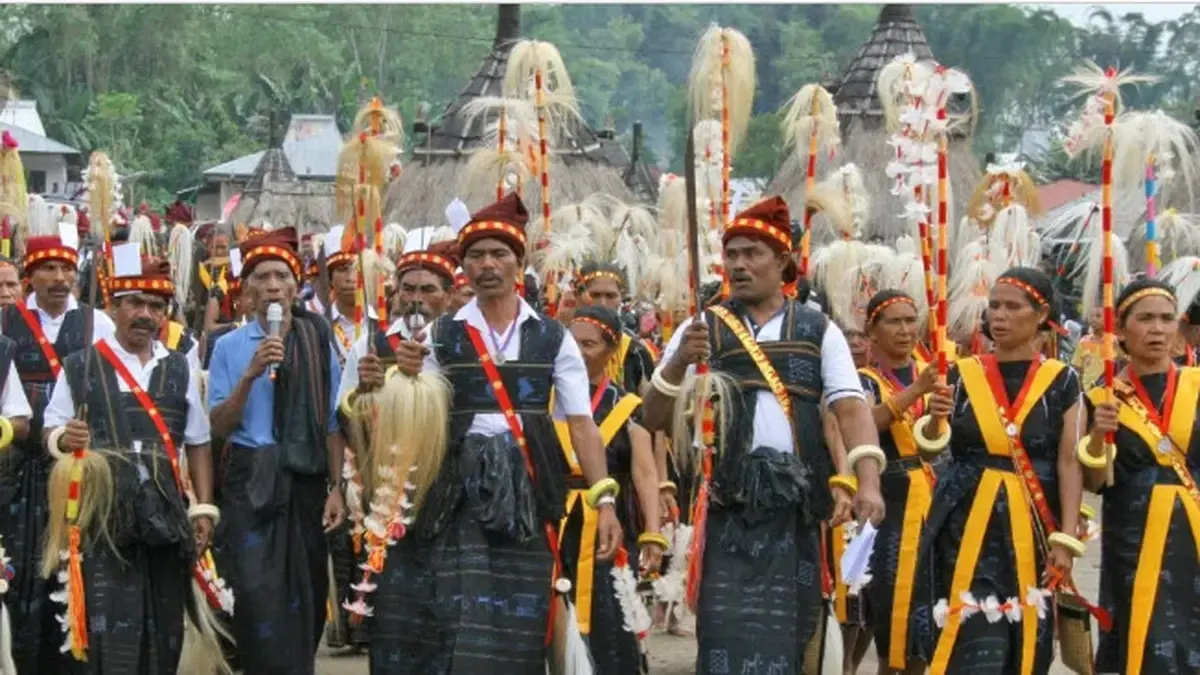
Every visitor, without exception, is received in the main drum house for the Waelu welcome ceremony before doing anything else. An elder speaks a short ritual in Manggarai asking the ancestors to accept you as a guest; your guide translates and hands over your donation. The standard contribution is about IDR 325,000 per person for an overnight stay, which covers the ceremony, your mattress and blankets in a communal guest house, dinner, and breakfast — Manggarai highland coffee included, grown on the slopes you just climbed. Day visitors contribute less; confirm the current figure with your guide on the drive out.
Set expectations now: there is no wifi, no phone signal, and electricity runs only a few evening hours from a micro-hydro system. That is not a hardship to endure — it is most of the point. Guests who arrive braced for boredom end up sitting around the cooking fire listening to stories through a translator until the village goes quiet around 21:00.
What the Seven Mbaru Niang Actually Are
The mbaru niang are the cone-shaped houses the photographs are built on — five-level structures of wood and bamboo thatched from ground to peak with palm fibre and reeds. Each level has a defined role: living quarters at the base, food stores above, seed grain higher still, offerings at the top. Several related families share each house, and the number is fixed at seven by custom, arranged in an arc facing the ceremonial compang stone circle. When a house decays, the village rebuilds it the traditional way — a practice that earned Wae Rebo a UNESCO Asia-Pacific Heritage Award for cultural conservation in 2012. You are not visiting a museum reconstruction; people live, cook, and raise children in these houses today, which is exactly why the protocol above exists.
Add Wae Rebo to Your Komodo Itinerary
Boat + village combo from $520 — driver, local guide, village donation, and overnight arranged for you.
Overnight or Day Visit?
If the schedule allows it at all, stay the night. The day-trip math is brutal — roughly 7 hours in a car and 5 on the trail wrapped around barely 2 hours in the village, most of it shared with every other day visitor who arrived on the same schedule. Overnight guests get the two windows that make Wae Rebo worth the effort: late afternoon after the day-trippers descend, when the village returns to its own rhythm, and dawn, when mist pools in the valley and woodsmoke rises from seven roofs at once. Night skies up here, with zero light pollution, are a genuine bonus. The only good arguments for a day visit are a hard flight deadline or travel with very young children.
Combining Wae Rebo With a Komodo Boat Trip
Most of our guests do both, and sequencing is where trips go wrong. A 3D2N sailing itinerary already includes the 05:15 Padar sunrise climb and multiple swim stops; stacking a 1,100 m trek directly onto disembarkation day is a recipe for a miserable climb. We schedule a rest day between the boat and the mountain — disembark in the morning, sleep properly in Labuan Bajo, then leave for Denge at 05:30 the next day. Our Komodo and Wae Rebo combo tour packages exactly this rhythm over 4–5 days from $520 per person, with the SiOra park reservations, driver, guide, and village donation handled. Travelers with more time can fold the village into a fuller loop — see our one-week Komodo itinerary for how a 6–7 day plan absorbs both the boat days and the highlands without a single rushed morning.
One practical note for 2026: the 1,000-visitor daily cap on Komodo and Padar islands means boat dates are the fixed point in any plan. Lock the sailing dates first, then build the Wae Rebo leg around them — never the reverse.
Packing for a Cool, Wet Highland
Guests come off a boat where 31°C and sunscreen were the whole story, and the highlands catch them out. Wae Rebo nights drop to 15–18°C, and rain can arrive any month of the year. Pack: a fleece or warm layer for the evening, a rain shell, trail shoes or grippy sneakers (the descent is slick — sandals are a bad idea), a headlamp for the pre-dawn walk to the viewpoint, 1.5 litres of water per person for the climb, cash in small IDR notes for coffee and woven souvenirs, and a dry bag for camera gear. Leave the drone: flying one over the village requires permission you will not get on arrival, and the ancestors’ houses are not a film set.
Photography at Wae Rebo: The Etiquette
Photography is welcome after the welcome ceremony — not before, and never inside a family’s living quarters without a direct invitation. Ask before photographing elders or children; your guide will broker it, and the answer is almost always yes when you ask first. The classic frame — all seven mbaru niang from the Pos 3 rise — needs nothing more than morning light and patience. Shoot generously outdoors, put the camera away at the fire, and buy your souvenirs from the weavers you photographed. That is the whole code, and villages remember the guests who follow it.
Ready to Climb to the Seven Houses?
Tell us your boat dates and we build the Wae Rebo leg around them — driver at 05:30, guide, donation, and overnight all set.
Komodo & Wae Rebo Combo Tour
Boat + village in one 4–5 day plan from $520 — rest day included, all permits and donations arranged.
Komodo Trip: One Week Itinerary
How 6–7 days absorbs the boat, the highlands, and Wae Rebo without a rushed morning — from $900 shared.
Komodo to Flores Overland
Ruteng, Todo, Cancar spider-web rice fields — where Wae Rebo fits on a full Flores crossing.