
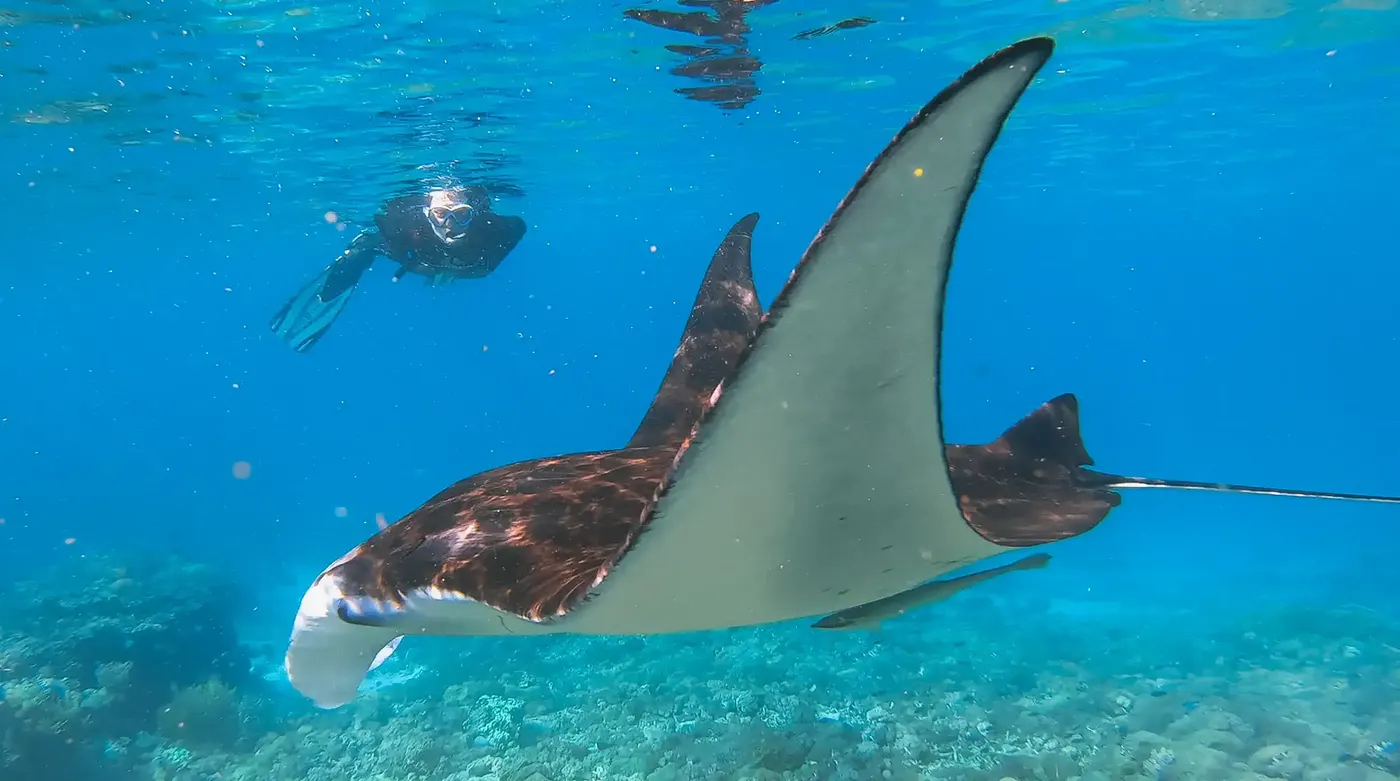
Komodo Dive Sites — The Complete Underwater Map
12 named sites, 3 zones, one honest guide to depths, currents and seasons — written from our own logbooks
Quick Answer
Komodo dive sites cluster into three zones: the current-swept northern pinnacles (Castle Rock, Crystal Rock), the all-levels central reefs (Batu Bolong, Siaba Besar) and the cool, manta-rich south (Manta Alley, Cannibal Rock). Depths run 5–35 m, water 22–29°C. Certified divers join day trips from $120; southern sites need a liveaboard from $450.
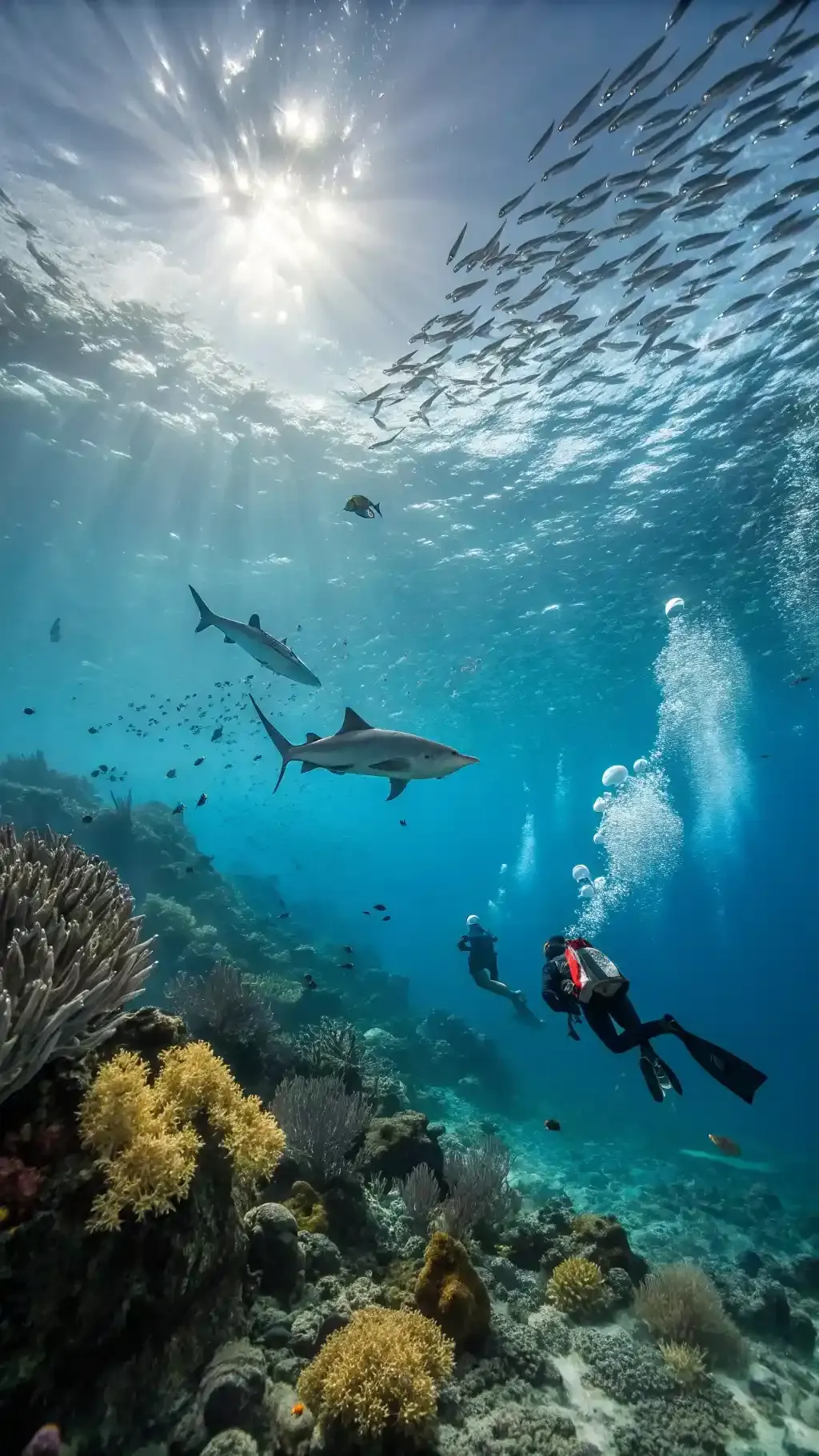
How Komodo Dive Sites Are Organised: Three Zones
Komodo National Park protects 1,733 square kilometres of islands and sea between Sumbawa and Flores, and roughly two-thirds of it is water. Our crews dive around 30 named sites inside the park, but twelve do the heavy lifting — and they split neatly into three zones with completely different personalities. The north is adrenaline: submerged pinnacles washed by Pacific water. The centre is the everyday playground: turtle bays, drift reefs and manta cleaning stations 60–90 minutes from Labuan Bajo. The south is an expedition: cold, plankton-rich Indian Ocean water that feeds the best macro life and manta aggregations in the park.
Every diver pays the park’s daily fees on top of any trip price: IDR 250,000 (~$16) entry, IDR 25,000 dive surcharge and IDR 25,000 harbor fee. Since April 2026 the Komodo–Padar zone also runs a 1,000-visitor daily cap through the SiOra reservation system, so we lock permits the day you book. Komodo Trip has been operated by Komodo Luxury since 2015; the notes below come from our guides’ logbooks, not a directory. For schedules, boats and full pricing, start with our diving in Komodo day-trip program — this page is the map, that one is the booking desk.
North Komodo: The Current-Swept Pinnacles
The northern sites sit around Gili Lawa Laut, about 1 hour 45 minutes from Labuan Bajo by speedboat — reachable on a day trip, better as two dives run back-to-back on the same tide. Water holds 27–29°C with 20–30 m visibility through the dry season. This is where Komodo earns its reputation for current, sharks and big schooling fish.
1. Castle Rock
Depth 4–30 m · Current strong · Advanced, 30+ dives · Best Apr–Nov
A seamount whose tip sits just 4 m below the surface. On a running tide you drop fast, hook in at 20–24 m and watch grey reef sharks, giant trevally and dogtooth tuna hunt the fusilier schools in open blue. For fish action, nothing else in the park matches it.
2. Crystal Rock
Depth 5–30 m · Current moderate–strong · Advanced · Best Apr–Nov
The rock breaks the surface at low tide, marking a pinnacle wrapped in orange and yellow soft coral. Eagle rays and white-tip sharks patrol the deeper ridge, and when the current allows a slow look, pygmy seahorses hide in the gorgonians around 18 m.
3. Shotgun (The Cauldron)
Depth 5–24 m · Strong drift · Advanced · Best Apr–Nov
A channel dive between the two Gili Lawa islands. You drop into a sandy bowl, wait while mantas and eagle rays feed in the funnel, then fire through “the shotgun” at several knots. Short, fast and the most fun 40 minutes in north Komodo.
4. Gili Lawa Darat Reefs
Depth 5–24 m · Current mild · Open Water · Best Apr–Nov
Easy sloping coral gardens on the sheltered side of the island: turtles, cuttlefish and dense reef fish over healthy hard coral. We use it as the warm-up dive before the pinnacles, and liveaboards anchor here for the sunset ridge walk.
Central Komodo: The Everyday Heart of the Park
The central zone between Komodo and Rinca is the park’s workhorse: 60–90 minutes from the harbor, diveable in every season, and home to everything from try-dive bays to the park’s most famous rock. Several of these reefs are shallow enough that our Komodo snorkeling trips share them, so mixed groups of divers and snorkelers work well here.
5. Batu Bolong
Depth 5–30 m · Very strong on exchange · Open Water at slack only · Year-round
A rock the size of a small house hiding a wall that drops past 40 m. We dive it only inside the 30–40 minute slack window — Captain Yusuf plans the whole day around that tide table. Inside the window: napoleon wrasse, hawksbill turtles and anthias so dense the wall shimmers.
6. Siaba Besar & Siaba Kecil
Depth 5–24 m · Mild (Besar) to fast drift (Kecil) · OW / Advanced · Year-round
Siaba Besar is Turtle Town: a sheltered sandy bay at 5–18 m where green turtles graze on nearly every dive — our first choice for newly certified guests. Siaba Kecil next door is its opposite: a one-way drift past cabbage-coral terraces at 10–24 m that ends almost before you notice 45 minutes have gone.
7. Tatawa Besar
Depth 5–21 m · Moderate drift · Open Water with drift experience · Mantas Dec–Mar
A conveyor-belt drift over slopes of orange cup coral. From December to March reef mantas commute through to the cleaning stations — pair it with nearby Manta Point (Karang Makassar) for the best odds of a ten-manta day.
Dive the Sites, Skip the Guesswork
Tell us your certification level and dates — we match the zone, the tide and the boat for you.
Book Now WhatsApp UsSouth Komodo: Cold Water, Big Animals, Technicolor Walls
Horseshoe Bay and the southern coasts sit more than three hours from Labuan Bajo across open water, which makes them realistic only from a Komodo diving liveaboard (from $450 for three days). The reward is Indian Ocean upwelling that drops the water to 22–25°C in July–September and feeds colour and macro life you will not find anywhere else in the park. Pack a 5 mm wetsuit and a torch.
8. Manta Alley
Depth 5–25 m · Current mild–moderate · Open Water · Best Jul–Sep
A cluster of rocky islets off south Komodo with cleaning stations at 5–18 m. During the upwelling season we regularly count ten or more reef mantas on a single dive — queueing, feeding, barrel-rolling. The plankton soup that feeds them is the same water that chills you.
9. Cannibal Rock
Depth 5–28 m · Current mild · Open Water · Best Jul–Sep
A small seamount in Horseshoe Bay ranked among Asia’s great macro dives: sea apples, zebra crabs, frogfish and a nudibranch count that resets your standards. Rinca’s dragons patrol the beach behind the anchorage, so even the surface interval earns photos.
10. Yellow Wall (of Texas)
Depth 5–30 m · Current mild · Open Water · Best Jul–Sep
A wall in Loh Dasami glowing with yellow soft corals and sea apples that open fully after dark — for our guides, the best night dive in the park. The water runs 2–3°C cooler than the north; the colour payoff is worth every degree.
11. German Flag
Depth 8–30 m · Current moderate · Advanced preferred · Best Jul–Sep
Boulder terrain off Nusa Kode where schooling snapper, bumphead parrotfish and Spanish mackerel work the corners. It is less famous than its Horseshoe Bay neighbours, which is exactly why liveaboard groups often have it entirely to themselves.
12. Pillarsteen
Depth 10–35 m · Current moderate · Advanced · Best Jul–Sep
South Padar’s pinnacle field: canyons, chimneys and swim-throughs carved by Indian Ocean surge, patrolled by white-tip sharks. Bring a torch for the overhangs and shoot wide-angle — the architecture is the subject here.
Komodo Dive Sites by Season
Use this matrix to match sites to your travel window. “Excellent” means the site is at its statistical best; “Fair” means diveable but second-choice. North and central peak through the dry season, while the south trades warmth for wildlife in July–September and calm seas for December–March.
| Site | Zone | Min. cert | Apr–Jun | Jul–Sep | Oct–Nov | Dec–Mar |
|---|---|---|---|---|---|---|
| Castle Rock | North | Advanced | Excellent | Excellent | Excellent | Fair |
| Crystal Rock | North | Advanced | Excellent | Excellent | Excellent | Fair |
| Shotgun / Cauldron | North | Advanced | Excellent | Good | Excellent | Fair |
| Gili Lawa Darat | North | Open Water | Excellent | Good | Excellent | Fair |
| Batu Bolong | Central | OW at slack | Excellent | Excellent | Excellent | Good |
| Siaba Besar / Kecil | Central | Open Water | Excellent | Excellent | Excellent | Good |
| Tatawa Besar | Central | Open Water | Good | Good | Excellent | Excellent (mantas) |
| Manta Alley | South | Open Water | Fair | Excellent (cold) | Good | Good |
| Cannibal Rock | South | Open Water | Fair | Excellent (cold) | Good | Good |
| Yellow Wall | South | Open Water | Fair | Excellent (cold) | Good | Good |
| German Flag | South | Advanced | Fair | Excellent (cold) | Good | Good |
| Pillarsteen | South | Advanced | Fair | Excellent (cold) | Good | Good |
How the Currents Actually Work
Komodo sits in the throat of the Indo-Pacific throughflow: on every tide, water squeezes between the Flores Sea and the Indian Ocean through the narrow Sape and Lintah straits. The height difference between the two seas can push currents past 4 knots at exposed sites — and that moving water is precisely why the park holds sharks, mantas and metre-thick fish schools in the first place. No current, no Komodo.
The practical rule: big sites get dived at tide states, not clock times. We run Batu Bolong at slack, ride the Shotgun on a building flood and hook in at Castle Rock when the split current lines the sharks up in one predictable lane. Full moon and new moon roughly double the exchange, so we bias those weeks toward sheltered sites and keep guide ratios in the north at four divers per guide. A briefing that names the tide state is worth more than one that names the site.
Matching Komodo Dive Sites to Your Certification
Open Water with fewer than 20 dives: Siaba Besar, the Gili Lawa reefs, Tatawa Besar and — at true slack — Batu Bolong will fill three full days without repeating a reef. Advanced with 30+ logged dives: add Castle Rock, Crystal Rock and the Shotgun, ideally carrying a reef hook and an SMB you can deploy mid-water. Not certified yet? A supervised try scuba diving day in Siaba Besar’s sheltered bay (from $120) is how plenty of our own crew started.
We enforce the limits the cards imply: Open Water divers stay above 18 m, Advanced above 30 m, and every north-zone dive carries a mandatory surface marker and a licensed guide. The south asks less of your skills and more of your schedule — any comfortable Open Water diver can enjoy Cannibal Rock; the challenge is simply getting a liveaboard berth in the July–September window.
Ready to Put These Names in Your Logbook?
Dive day trips from $120, liveaboards from $450 — send us your dates and cert level and we will build the route.
WhatsApp Us