Every guest who steps aboard asks the same question before we cast off from Labuan Bajo: where are the best snorkeling spots in Komodo? After running boats in the park since 2015, our crew has a firm answer — and it is not always the sites Instagram promotes. Andi, our lead park guide, and Captain Yusuf ranked the seven sites below by what actually matters once your mask hits the water: what you will see, how easy the entry is, how the current behaves, and how reliable the site stays across the season.
Quick Answer
The best snorkeling spots in Komodo are Manta Point (Karang Makassar), Pink Beach, Taka Makassar, Siaba Besar, Kanawa, Sebayur, and Mawan. A shared day trip from Labuan Bajo covers three to four of them from $120 per person; a 3D2N liveaboard from $220 reaches all seven.
All seven sites sit in the central and northern park, where the water runs 26–29°C and visibility averages 15–25 m through the dry season (April–November). Park entry for foreign visitors is IDR 250,000 (~$16) per day, and snorkelers skip the IDR 25,000 dive surcharge that divers pay. Bring reef-safe sunscreen and a rash guard — at these sites you will be face-down for hours.
1. Manta Point (Karang Makassar) — Drift With the Mantas
Depth: 4–10 m · Entry: boat drift · Current: moderate–strong · Best: slack tide; December–February for peak mantas
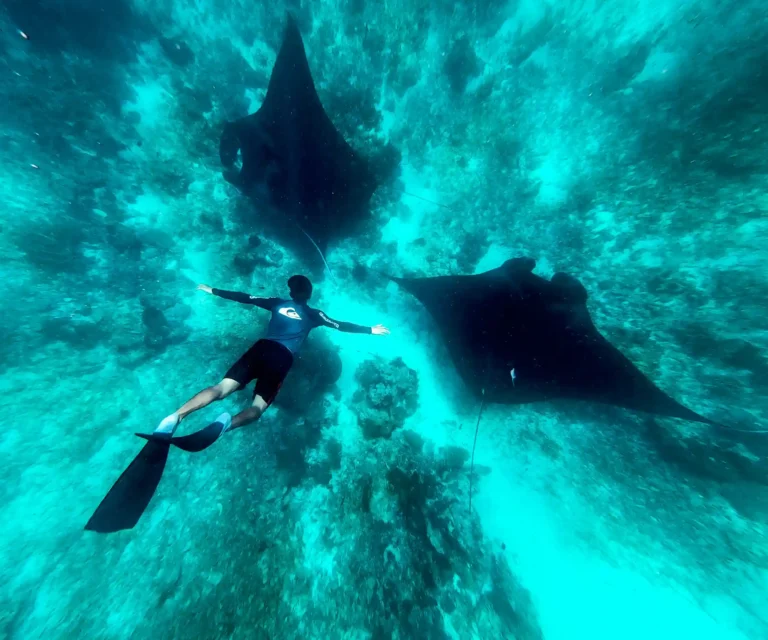
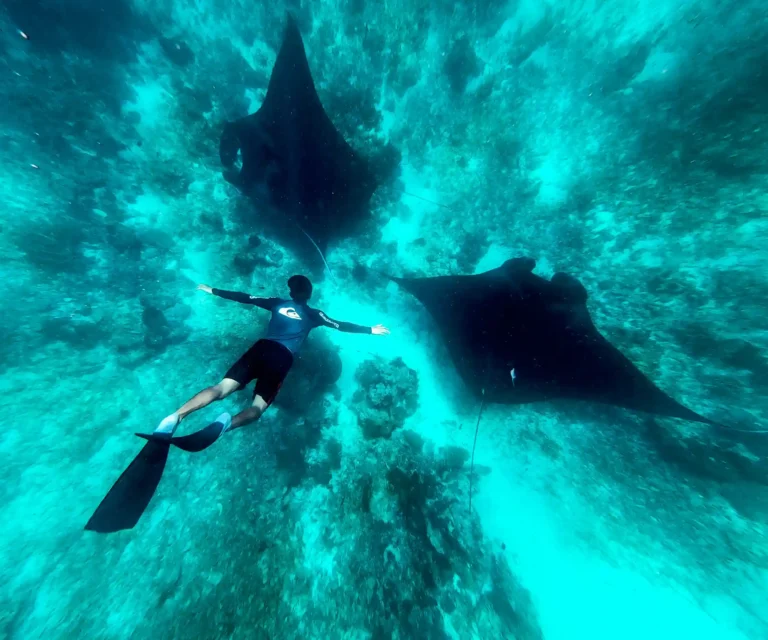
Karang Makassar is a rubble flat nearly 3 km long, and it is the one site our crew never skips. Reef mantas with 3–4 m wingspans hold position over cleaning stations in barely 5 m of water, which means snorkelers on the surface often get a better view than divers underneath them. This is a drift snorkel: Captain Yusuf drops the group at the up-current end, the tender shadows you, and you glide over the rubble at one to two knots without kicking. We aim for the hour around slack tide — usually mid-morning, around 09:30 — because on spring tides the flow can exceed two knots and we shorten the drift or reroute to Mawan. Mantas are present year-round, but the plankton bloom from December to February brings feeding trains of ten or more animals. The bottom here is rubble rather than coral garden; you come for the animals, not the reef. Read our full Manta Point guide for tide tables and etiquette rules.
2. Pink Beach Reef — The Easiest Coral Garden in the Park
Depth: 1–6 m · Entry: beach, sandy bottom · Current: mild at slack · Best: high tide, morning or 14:00 light
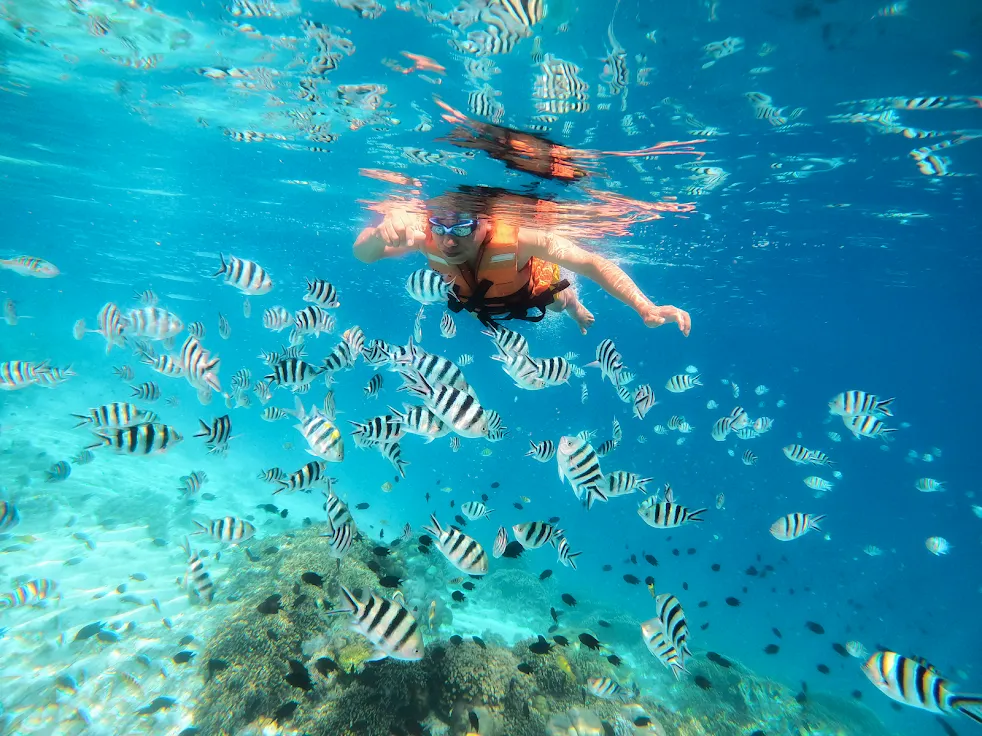
The coral garden at Pink Beach starts about 20 m off the rose-tinted sand, so you wade in from the shallows instead of jumping off a boat — the reason our guides send every nervous swimmer here first. Table corals, staghorn thickets, and clouds of orange anthias sit in one to six meters of clear water, with hawksbill turtles grazing the deeper edge. Current is close to zero inside the bay at slack tide; it picks up off the far point, so we rope off the safe zone and keep the group inside it. Come at high tide, when the water over the shallow plate is deep enough to float without fin contact — the corals here have survived because visitors stay off them. The pink hue comes from crushed red foraminifera and organ-pipe coral mixed into the sand, and it photographs best before 10:00.
3. Taka Makassar — Sandbar Snorkeling in Two Meters of Water
Depth: 1–3 m lagoon, 12 m outer slope · Entry: beach off the sandbar · Current: mild inside, moderate outside · Best: mid-to-low tide, when the crescent is exposed
Taka Makassar is a crescent of white sand roughly 100 m long that surfaces at mid-to-low tide, ten minutes by boat from Manta Point. The lagoon side is a swimming-pool flat of one to three meters over sand and scattered coral heads — the single best place in the park to teach a child or a first-timer to snorkel. The outer rim slopes to about 12 m, where eagle rays and passing mantas cruise the channel. We schedule it back-to-back with Manta Point on the same tide window, which is why the two appear together on nearly every itinerary. One honest note: the sandbar is tiny and popular, so we land at 08:00 or after 15:00 to dodge the midday fleet. If you plan aerial photos, the park requires a drone permit — IDR 2,000,000 per day through the BTNK office — so most guests leave the drone at home.
4. Siaba Besar — Turtle Town
Depth: 2–12 m · Entry: boat, sheltered bay · Current: minimal, any tide · Best: year-round; afternoons are quietest
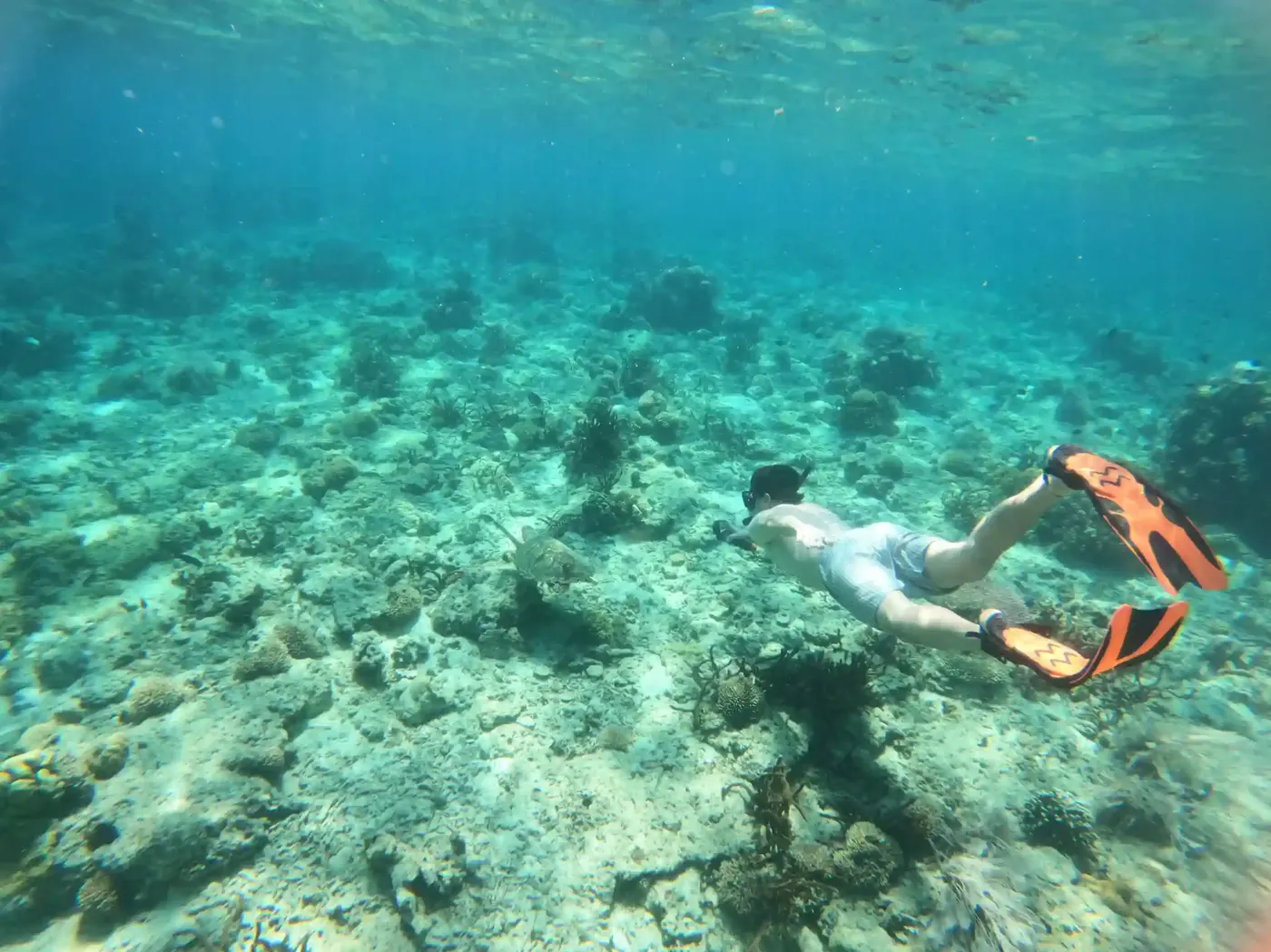
Divers call Siaba Besar “Turtle Town,” and the name is earned: on a typical 45-minute swim over the seagrass beds and coral bommies, Andi counts six to ten green turtles, most of them unbothered at snorkel depth. The bay is sheltered from the main channel flow, so current is close to nil at any tide state — this is the site we choose when wind or springs make the marquee sites hard work. The reef plate runs two to five meters with a gentle slope to twelve, and the sand patches between bommies hold garden eels and the occasional resting whitetip. Liveaboards often anchor here overnight, which puts you in the water at 06:30 before any day boat arrives. If turtles are the one animal on your list, this is the surest bet in the park.
Want a Crew That Times the Tides for You?
Our captains plan every stop around slack water and manta activity — day trips from $120, liveaboards from $220 per person.
5. Kanawa Island — The House Reef Nearest Labuan Bajo
Depth: 2–15 m · Entry: jetty or beach · Current: mild · Best: dawn for blacktips; dry season for visibility
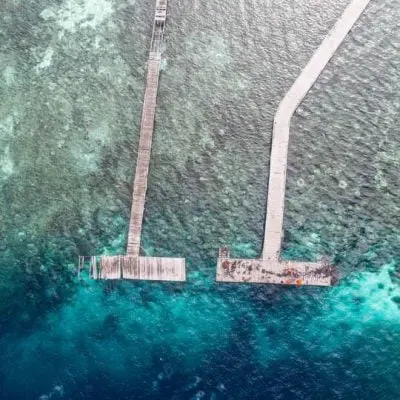
Kanawa sits about 45 minutes from Labuan Bajo harbor, just inside the park’s eastern approach, which makes it the practical choice when you have half a day rather than a full one. The house reef starts under the old jetty and slopes from two to fifteen meters, dense with staghorn and fusilier schools. At first light, blacktip reef sharks patrol the sandy shallows in knee-deep water — harmless, and the reason our crews love an early start here. Current is mild on most tides, though the channel side stiffens on springs. Because it is outside the Komodo–Padar circuit, Kanawa usually appears on liveaboard routes as a first-evening or last-morning stop rather than on standard day trips.
6. Sebayur — Calm Water for First-Timers
Depth: 3–18 m · Entry: boat or beach · Current: low · Best: late afternoon; calm on almost any forecast
Sebayur Besar is where Labuan Bajo’s dive schools run their training sessions, and that tells you everything about conditions: reliably calm, easy entries, and a forgiving sandy-bottomed reef slope from three to eighteen meters. What it lacks in big animals it repays in coral condition — the shallows hold some of the healthiest hard-coral cover on this side of the park, with morays, sweetlips, and the odd turtle along the drop. We use Sebayur two ways: as the confidence-builder before Manta Point for weak swimmers, and as a golden-hour stop on the sail home when the light turns the reef amber. If your group mixes strong and nervous swimmers, this is the site where everyone gets a full session in the water.
7. Mawan — The Sloping Reef With Bonus Mantas
Depth: 5–15 m · Entry: boat drift, gentle · Current: low–moderate · Best: midday between the Manta Point and Padar windows
Mawan is the sleeper on this list. A small sand-fringed island between Manta Point and Padar, it offers a gentle sloping reef of five to fifteen meters with garden eels on the sand flats and dense fish life on the bommies. Because it sits on the same manta highway as Karang Makassar, animals regularly cruise past mid-water — several of our best manta encounters of 2026 happened here, not at Manta Point itself. The drift is slower and shorter than Karang Makassar, which makes Mawan our standard substitute when springs make the main site too fast. It slots naturally into the midday gap between a morning manta drift and an afternoon Padar climb, so crews that know the park use it constantly while first-time visitors sail straight past.
Which Trips Visit the Best Snorkeling Spots in Komodo?
No single day covers all seven — the park is 1,733 km² and distances are real. A shared Komodo day trip from $120 per person hits the central trio (Manta Point, Taka Makassar, Pink Beach) alongside Padar and the dragons. Our dedicated Komodo snorkeling trip trades land time for two extra reef sessions. A 3D2N liveaboard from $220 per person is the only realistic way to swim all seven, including the dawn sessions that day boats can never reach. Note that from April 2026 the park caps the Komodo–Padar zone at 1,000 visitors per day under the SiOra reservation system — we lock in permits when you book, but last-minute high-season dates do sell out.
| Snorkel Spot | Day Trip (from $120) | Snorkeling Trip | 3D2N Liveaboard (from $220) |
|---|---|---|---|
| Manta Point | Yes | Yes | Yes |
| Pink Beach | Yes | Yes | Yes |
| Taka Makassar | Yes | Yes | Yes |
| Siaba Besar | Sometimes | Yes | Yes |
| Kanawa | No | Add-on | Yes |
| Sebayur | No | Add-on | Yes |
| Mawan | Sometimes | Yes | Yes |
Safety Notes for Weak Swimmers
Our guides have put thousands of guests in the water since 2015, and the pattern is consistent: problems come from current, not depth. If you are not a confident swimmer, tell the crew before the first stop — we carry life vests and foam noodles on every boat and nobody will blink. Start at Pink Beach, Taka Makassar’s lagoon, or Siaba Besar, where you can stand or float in near-zero current, and only join the Manta Point drift once you are comfortable; on strong-current days we will steer you to Mawan or Sebayur instead. Three rules our guides repeat daily: stay up-current of the tender, keep your guide between you and open water, and raise one arm high if you want a pickup — the boat comes to you, always. Guide ratio on our trips is one guide per six snorkelers, and licensed park guides accompany every landing.
Do You Need to Dive, or Is Snorkeling Enough?
Honest answer: for five of these seven sites, snorkeling is not a compromise — it is the better ticket. Mantas at Karang Makassar feed at the surface, turtles at Siaba graze at three meters, and the coral plates at Pink Beach and Taka Makassar top out shallower than a dive computer bothers logging. Where diving wins is the current-swept pinnacles — Batu Bolong and Castle Rock — which are genuinely world-class and genuinely unsuitable for snorkeling. If you hold a certification, a two-dive add-on alongside your snorkel days is worth the IDR 25,000 daily dive surcharge; if you do not, spend nothing on courses and put the savings toward an extra day on the water. Conditions and site rules are published by the park authority at Komodo National Park.
Snorkel All Seven With Our Crew
Day trips from $120 · 3D2N liveaboards from $220 per person · licensed park guides on every trip. Operated by Komodo Luxury since 2015.
Keep Planning Your Komodo Trip
Komodo Snorkeling Trip
Our reef-first itinerary: more water time, fewer crowds, all the central sites in one day.
Komodo Day Trip from $120
Dragons, Padar sunrise, and three snorkel stops on a shared speedboat from Labuan Bajo.
Manta Point Guide
Tides, seasons, and in-water etiquette for the park’s most famous drift snorkel.