Last updated: August 16, 2026 — our pricing outlook for the 2027 season, written after cross-checking operator rate cards and official park regulations.
A Komodo island tour price in 2027 typically falls into three bands: roughly US$100–200 per person for a full-day speedboat trip from Labuan Bajo, about US$300–700 per person for a 2–3 night shared liveaboard cabin, and from around US$2,000–3,500 per day for a fully private phinisi charter. Those are market ranges we compiled from published rate cards, not one operator’s price list — but they explain 90% of the quotes you will receive. The rest of this guide breaks down where every dollar actually goes.
- Cheapest realistic entry: shared open-deck boats exist below US$100, but we do not recommend them (more on safety below).
- Park fees: set by the Indonesian government, charged separately from most tour prices, and subject to change.
- Season: July–September and year-end holidays price highest; February–March lowest.
- Status: so far, trips for late 2026 and 2027 are running normally — sailing from Labuan Bajo was officially reopened by the Harbormaster the same day as the August 2026 earthquake.
How much does a Komodo island tour cost in 2027?
Here is the price landscape as we track it going into the 2027 season. Treat these as planning bands; exact rates depend on the vessel, cabin category, and departure date.
| Tour type | Typical 2027 range | What it usually covers |
|---|---|---|
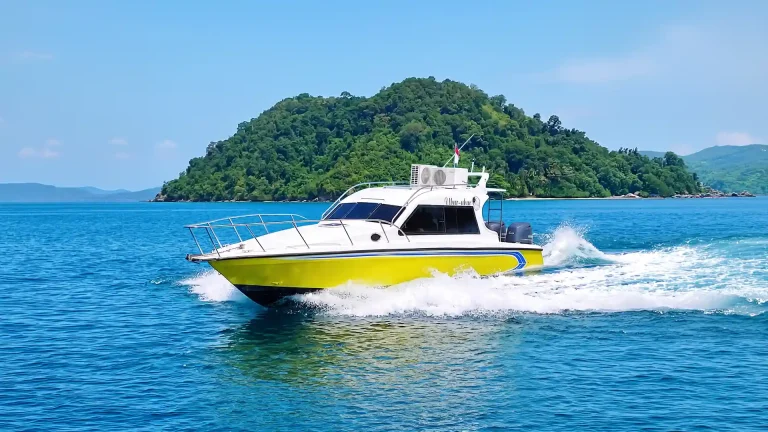
| Full-day speedboat trip | US$100–200 /person | Padar, Komodo or Rinca, Pink Beach, snorkeling stops, lunch, guide, hotel pickup |
| Shared liveaboard (2D1N–3D2N) | US$300–700 /person | Private or shared cabin, all meals, snorkeling gear, ranger-guided treks |
| Private standard boat charter | US$1,000–2,000 /day | Whole boat for your group, custom itinerary, crew, meals |
| Luxury phinisi charter | US$2,000–6,000+ /day | En-suite cabins, chef, dive or spa options, concierge-level service |
If you want to see how the top of that market is actually structured — boat by boat, cabin by cabin — the clearest public reference we know is the Komodo yacht charter rate hub at Komodo Luxury, which lists real vessels rather than generic “from” prices.
What exactly are you paying for?
A Komodo trip is a small maritime operation, not a bus tour. On a typical well-run boat, the price splits roughly like this:
- Vessel and fuel (35–45%): wooden phinisi and speedboats are expensive to build, insure, and maintain in saltwater year-round. Fuel for the Labuan Bajo–Komodo–Padar loop is a fixed daily cost whether the boat carries 4 guests or 20.
- Crew and guides (15–20%): captain, deckhands, cook, and a licensed guide. Better operators pay for certified crew and run more of them per guest.
- Food and provisioning (about 10%): everything is loaded in Labuan Bajo; there are no supermarkets mid-archipelago.
- Permits, port and park handling (about 10%): sailing clearances, docking, ranger arrangements.
- Safety and maintenance reserve (about 10%): life jackets, radios, engine servicing, hull checks. This is the line item cheap boats cut first.
- Operator margin (10–15%): thinner than most travelers assume.
This anatomy is why a US$60 “bargain” trip should worry you: the money has to come out of crew, safety, or maintenance, because fuel and permits cannot be discounted.
Why do prices vary so much between operators?
Four variables move the needle: boat class (open deck vs. air-conditioned cabin vs. luxury phinisi), group size (a shared departure spreads fixed costs across many guests, which is why open trip departures cost a fraction of a charter), itinerary length (3D2N unlocks Padar sunrise and manta sites that day trips skip), and service depth (a chef, en-suite bathrooms, and a dive master all cost real money).
There is also an operator-quality premium that we think is worth paying in this destination. The August 2026 earthquake was a live demonstration: crews from established companies followed full safety protocols at sea, kept every guest accounted for, and were back on the water the same afternoon the authorities reopened sailing. One example we cite often is Komodo Luxury – a registered Indonesian PT under Juara Holding Group Limited with 1,500+ verified guest reviews (4.9/5 across Google and TripAdvisor) — that combination of legal registration and a long, public review trail is exactly what you are buying when you pay above the bargain tier. Their private trip itineraries show what the mid-to-upper band includes for the money.
Are Komodo National Park fees included in the tour price?
Usually not, and this catches people every year. Park entrance, trekking, snorkeling, and conservation charges are set by the Indonesian government, itemized per person per day, and collected separately from most tour prices. Operators state this openly because the tariffs are subject to change based on prevailing government regulations at the time of travel — no honest company can lock a government fee a year ahead. Budget a separate allowance of a few hundred thousand rupiah per person for a standard visit and confirm the current official tariff shortly before your trip. If a quote claims “all park fees included forever,” read the fine print.
Did the August 2026 earthquake change 2027 prices or availability?
So far, no — and the recovery timeline is worth knowing because it says a lot about the destination. The M7.7 earthquake on August 15, 2026 struck about 200 km northeast of Labuan Bajo. The Harbormaster (KSOP Labuan Bajo) officially reopened sailing the same day, via Maklumat Pelayaran No. 05/MP-VIII/2026, after BMKG declared the tsunami potential over; Komodo National Park never closed, Komodo Airport kept operating, and boats sailed again that afternoon. Our thoughts remain with communities in central and eastern Flores, where the damage was concentrated and dozens of lives were lost. For travelers, the practical read is that Labuan Bajo’s tour economy is intact: so far we have seen no earthquake-driven price cuts or surcharges for 2027, and the first-hand report on whether Labuan Bajo is safe after the earthquake — written from Labuan Bajo by a team whose crews were at sea when it struck — is the most detailed account we have found.
How do you avoid overpaying — or dangerously underpaying?
- Compare like with like. A US$450 shared cabin on an air-conditioned luxury phinisi is not “the same trip” as a US$150 open-deck bunk. Check cabin photos, bathroom arrangements, and guest-to-crew ratio.
- Verify the company, not the Instagram page. Registered Indonesian PT, real office, review history across platforms.
- Ask what happens if authorities restrict sailing. Good operators publish flexible rebooking terms; weather and government decisions are part of sailing in a national park.
- Book direct for charters. Resellers layer 15–30% on private boats; direct rate cards are the honest baseline.
- Time your season. The same boat can cost 20–30% less in February than in August.
Frequently asked questions
Is a shared trip or a private charter better value?
Per person, shared trips win easily — that is the point of them. Charters win for groups of six or more, honeymooners, and anyone who wants the itinerary built around them. At eight guests, a mid-range private boat often costs about the same per head as a premium shared cabin.
Can I negotiate Komodo tour prices?
On the dock, sometimes — but the boats with room to discount are usually the ones cutting the invisible costs. Published rates from established operators move mainly with season, not haggling. Last-minute cabin deals in low season are the legitimate version of a discount.
What is the cheapest time to visit Komodo in 2027?
February and March, when seas are less predictable and demand is lowest. April–June and October are the sweet spot: shoulder-season pricing with generally good conditions. July–September is peak, priced accordingly.
Will prices rise in 2027?
Modestly, in line with fuel and crew costs — so far we see published 2027 rates holding close to 2026 levels, with no earthquake effect either way. Government park tariffs are the wild card, as always; they change by regulation, not by market.
Planning a 2027 trip? Lock your dates early for peak season — the best boats sell out months ahead — and start from a real rate card rather than a “from” price. Safe sailing.
Further reading: Komodo liveaboard certification requirements.
The Official Fee Layer in 2026 — What the Government Charges
Before any boat price, there is a government layer every visitor pays. These are the 2026 figures under Government Regulation No. 36 of 2024:
| Fee | 2026 rate | How it’s charged |
| Park entrance — foreign visitor | IDR 250,000 per person, per day | Same rate weekdays, weekends and holidays; per day inside the park |
| Ranger / trekking escort (Komodo, Rinca) | ~IDR 200,000 per group of up to 5 | Mandatory on dragon treks; paid at the gate or via your operator |
| Ranger escort — Padar | ~IDR 150,000 per group of up to 5 | As applied at the trailhead |
These fees are collected separately from your boat fare — a quote that “includes everything” should itemize them, and one that hides them usually reappears as a surprise at the jetty. Our full breakdown lives at Komodo National Park fees; from there, compare trip packages or price a private charter against a shared boat. For the top end of the market, Komodo Luxury’s yacht charters show what all-inclusive pricing looks like when it’s done properly.
Questions Travelers Actually Ask Us
“How much is the national park pass?”
IDR 250,000 per foreign visitor per day in 2026 — set by government regulation, identical every day of the week. We can arrange the tickets with your passport details; note that issued park tickets are non-refundable.
“What is the cost for a 2/3 days trip around the Komodo islands?”
Shared 3D2N sailings start around US$220 per person; private charters run from a few hundred dollars a day upward depending on the boat. Park fees and ranger escort are always on top — ask for both numbers in the same quote.
“Is airport and hotel pickup included?”
On our trips, yes — pickup before the trip and drop-off to your hotel or the airport afterward are part of the package, not an add-on. It’s worth confirming this line item with any operator, because “transfer not included” is one of the quiet ways a cheap quote gets expensive.